
[Video] Chinese e-truck manufacturer Windrose may begin producing in Europe
Windrose's CEO Han Wen stated that the company is "in talks with several European countries over investments". Windrose is cooperating with French sport retailer Decathlon over e-truck testing activities in China.
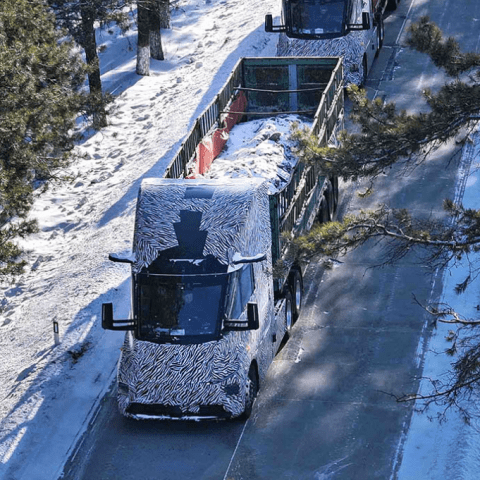
Chinese electric truck startup Windrose is evaluating the possibility to start producing zero-emission heavy vehicles in Europe. According to Reuters, Windrose’s CEO Han Wen (former manager at self-driving trucking company Plus) stated that the company is “in talks with several European countries over investments”. A deal may be signed by the end of March. Former Stanford graduate Wen did not specify which country might be involved in the possible agreeement.
Windrose electric truck in a video
It is quite interesting to notice that Windrose ha already launched testing activities with global sport retailer Decathlon, thus testing its electric truck in China, with plans to continue this collaboration also in Europe, and namely in France. Windrose is also exploring the possibility to enter the North American market.
Windrose electric heavy truck is equipped with 730 kWh battery, ensuring a range of about 600 km. The Tesla Semi, as well as Mercedes eActros 600, are the truck competitors, according to the communications released by the Chinese manufacturer.